
Prepare Safer Teen Drivers Before They Ever Hit the Road
A modernized novice driver training experience built for today’s students, instructors, and driving risks.
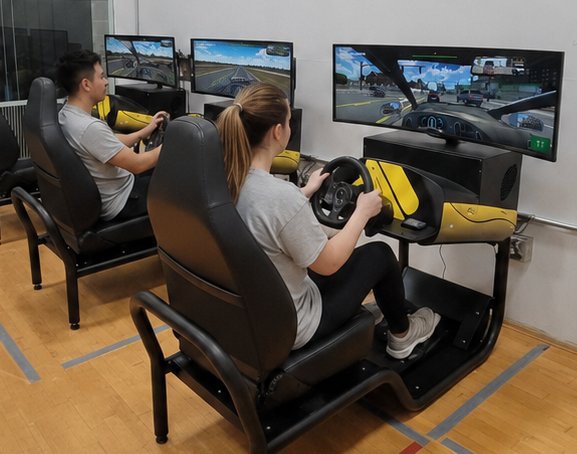
Built for Driver Education Programs
Novice Driving Essentials (NDE) gives schools and driver education programs a safer, more scalable way to prepare students before on-road training begins. Through structured simulation lessons, students build hazard awareness, decision-making, and vehicle control in a controlled environment where mistakes become teachable moments instead of safety risks.
For programs, NDE makes it easier to deliver consistent instruction, train more students, and reduce pressure on limited vehicles, schedules, and instructor ride time.
Superior Lessons, Measurable Driver Improvement
Classroom instruction teaches what students should know. NDE helps them practice how to respond. Across 14 structured lessons, learners face traffic, intersections, weather conditions, distractions, and pedestrian activity that are difficult to recreate consistently in traditional training. That means students get more meaningful repetition before they ever drive on the road.
Instructors can:
- Identify skill gaps early
- Reinforce safer decision-making
- Deliver more consistent coaching
- Track improvement across every learner

NDE Features at a Glance
Pre-Drive Assessment
Every learner starts with a baseline assessment, giving instructors a clearer view of current ability before training begins.
Targeted Skill Development
Students build core driving skills step by step, from vehicle control and speed management to intersections, parking, hazard recognition, and decision-making under changing road conditions.
Distracted Driving Prevention
Students experience how distractions affect reaction time, awareness, and judgment before those mistakes happen in real traffic.
Scalable Program Delivery
Simulation helps programs train more students with greater consistency, even when vehicle access, instructor time, and scheduling capacity are limited.
Measurable Outcomes
NDE gives instructors clearer visibility into how each student is progressing before on-road training begins. Using NDE's Vantage reporting tool, programs can review lesson completion, time on task, scores, assessment results, and key driving behaviors to identify who is improving, where coaching is needed, and how training is performing across the class.
14 Structured Lessons
NDE’s curriculum has been fully refreshed around current driver education priorities and real-world driving risks, so students are training for the road as it exists today. With enhanced realism across 14 structured lessons completed in approximately 3 hours of simulation time, each lesson is designed to help students develop safer habits through repeated exposure to true-to-life scenarios, not scripted memorization.

Tutorial

Pre-Assessment

Hazard Detection

What If?

Intersections

Signaling

Following Distance

Space Management

Sharing the Road

Weather and Road Conditions

Distracted Driving

Parking

Post-Assessment

Free Drive
Flexible Hardware Options for Any Space or Program
Whether you’re deploying in a classroom, training room, or dedicated facility, NDE offers simulator setups that balance space, immersion, and portability—without complicated installation.
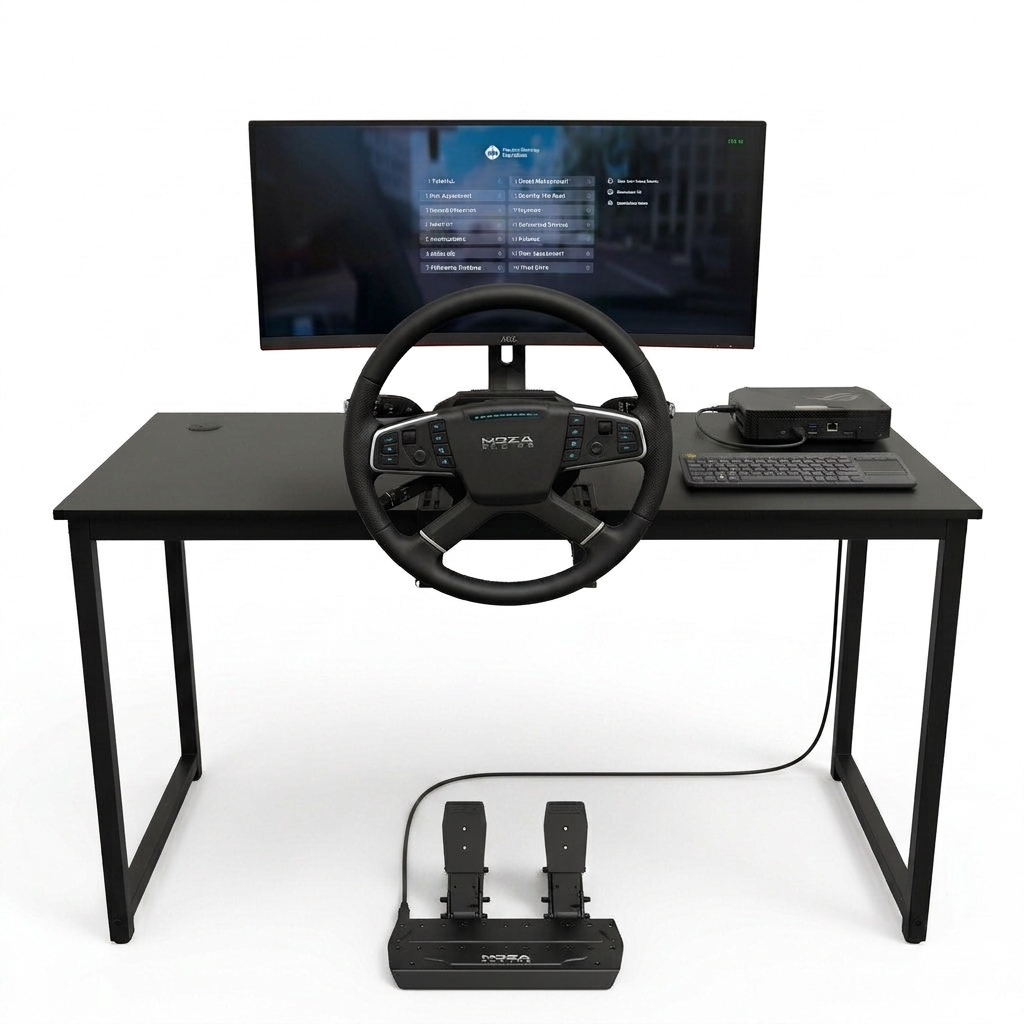
Desktop Series
Compact and immersive simulator built for limited-space environments. Comes with a full-sized steering wheel for a realistic feel.
Explore Desktop Series →
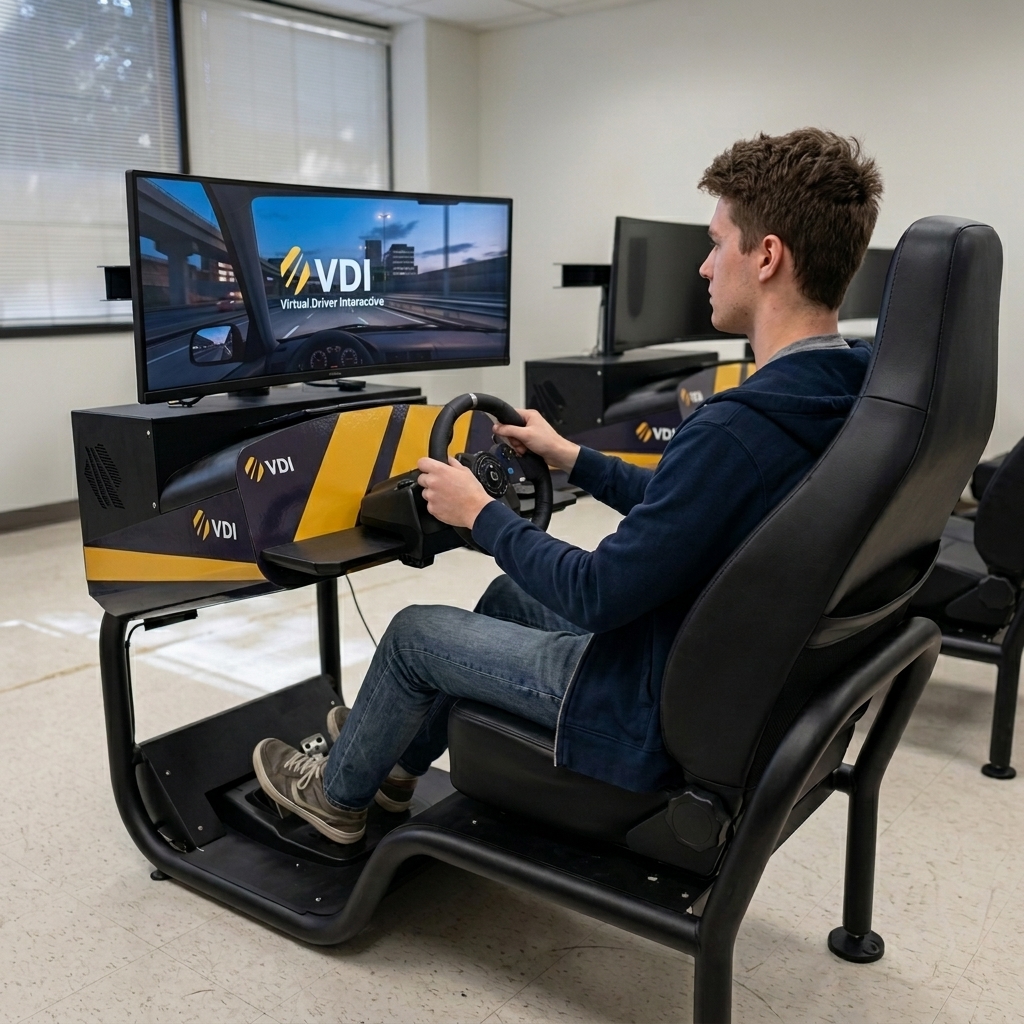
Full Cab Series
A fully self-contained, car-like training simulator for maximum realism.
Explore Full Cab Series →
Proven in the Real World
Hear from organizations that have adopted simulation technology to improve driver education and performance.
"We have used them with over 100 students for our summer program in June and to say that we are satisfied would be an understatement."
We recently purchased 16 driving simulators from VDI. We have used them with over 100 students for our summer program in June and to say that we are satisfied would be an understatement. They are FANTASTIC! I know for a fact they have helped with our behind the wheel program because they are so realistic! We have had zero problems with them and the students love them. There is plenty of driving scenarios and different variations you can use it’s incredible!
"We have been using Virtual Driver Interactive for almost a year now and it has been very good for our students."
We have been using Virtual Driver Interactive for almost a year now and it has been very good for our students. The program is realistic and very interactive. We have about 300 students a year that use the system. The students have given positive feedback as well. Students like how it’s self paced and realistic. I like how I can change the driving conditions and see how the system reacts. This is a great place to start with brand new drivers.
"These simulators teach everything from how speeding affects the physics of the car to the serious dangers associated with distracted driving."
We installed 13 VDI simulators this summer and our high school students have truly enjoyed the upgraded experience. These simulators teach everything from how speeding affects the physics of the car to the serious dangers associated with distracted driving. The sixteen lesson Driving Essentials program wonderfully complements our driver education classroom and lab components. Driving simulation allows my instructors to teach important lessons — like speeding or texting — that would be too dangerous to demonstrate on the road. The One Simple Decision program powerfully tackles the problem of distracted or impaired driving with realistic and hard-hitting scenarios. Thank you again for providing such a useful and versatile driver education curriculum product. The installation could not have gone smoother. Your assistance throughout the procurement process and especially your “service after the sale” has been top notch. We are extremely pleased with our VDI purchase.
"VDI is state of the art when it comes to creating a realistic program for training young drivers without putting them in harms way on the road."
We currently have 42 VDI simulators in four high schools in Forsyth County Georgia. VDI is state of the art when it comes to creating a realistic program for training young drivers without putting them in harms way on the road. The graphics are realistic and incorporate many lessons teaching students the correct way to handle hazardous road conditions. The students enjoy the lessons and parents have the ability to know what is being taught so they may be aware of what their children are learning week by week. Installation is stress-free and the installers are very professional. The One Simple Decision program includes distracted and impaired driving which is so important to address as many drivers are distracted leading to our increased death rate in our country.
"VDI has been an outstanding partner to work with offering a virtual training product that truly engages kids."
VDI has been an outstanding partner to work with offering a virtual training product that truly engages kids. After passing Joshua’s Law in 2005, I worked with VDI to put simulators in schools throughout the State of Georgia increasing the number of students taking Driver Education by 450% and reducing teen deaths by 60%. These simulators WORK!
Safer Driver Outcomes




Drop Us a Line
Strengthen driver education, improve consistency, and prepare students before on-road training begins.
Headquarters
899 Mountain Ave, Suite 1A
Springfield, NJ 07081
Phone
Frequently Asked Questions
Have questions about simulation-based driver training? Find answers below or reach out to our team.
What is a driving simulator for students?
A driving simulator allows students to practice real-world driving scenarios in a safe, controlled environment. It helps build skills before on-road driving.
How do high schools use a driving simulator in driver education?
High schools use driving simulators to prepare students before on-road training. Students practice hazard recognition, decision-making, and vehicle control in a structured environment, allowing instructors to build foundational skills before students drive in real traffic.
Can schools run driver education programs without enough vehicles?
Yes. Simulation allows schools to train more students without relying on vehicle availability. This improves access, reduces scheduling limitations, and enables consistent instruction across all learners.
Does simulation improve teen driver safety?
Yes. Simulation improves awareness and decision-making before students encounter real driving risks. A study by James Madison University found that 68% of students increased their awareness of distracted driving after simulation training.